You don’t have to fix yourself before you start moving
We live in a time when exercise is often sold as the solution to everything we think we should change about ourselves.
We’re supposed to be stronger, tighter, more disciplined, more efficient. There’s always a new version of the body we’re told we should be working toward. And in the middle of all that, it can be hard to tell when movement actually stops being something that gives us energy — and instead becomes yet another way of being hard on ourselves.
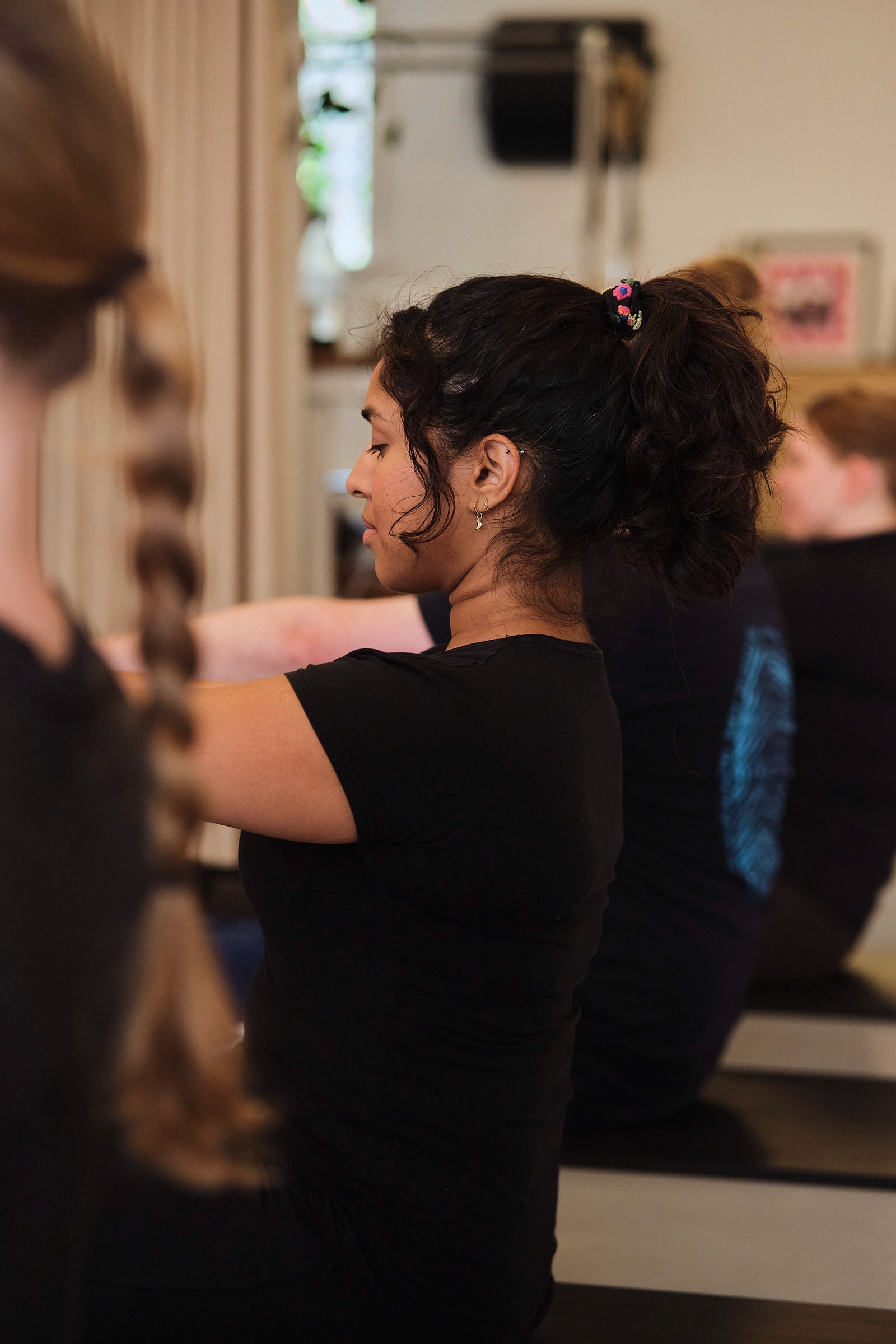
It’s something I think a lot about as an instructor at Frog Pilates.
Because even though I love intelligent, challenging movement, I’ve never been interested in creating a space where people feel like they have to arrive as a “better version” of themselves in order to belong.
Quite the opposite.
One of the most important things to me is that people feel they can come exactly as they are. Even on the days when the body feels heavy, tired, tense, or far away. Because the body is not a machine that works the same every day. It’s affected by stress, sleep, hormones, pregnancy, grief, work, overstimulation, and all the life we live outside the studio.
And maybe one of the most freeing things is realizing that movement doesn’t have to come from a place of not being enough.
That you can absolutely get stronger without being at war with your own body.
That was also part of what drew me to classical Pilates. Not because it was the most extreme workout I had tried, but because it was one of the first forms of movement where I felt my body start to work with me instead of against me.
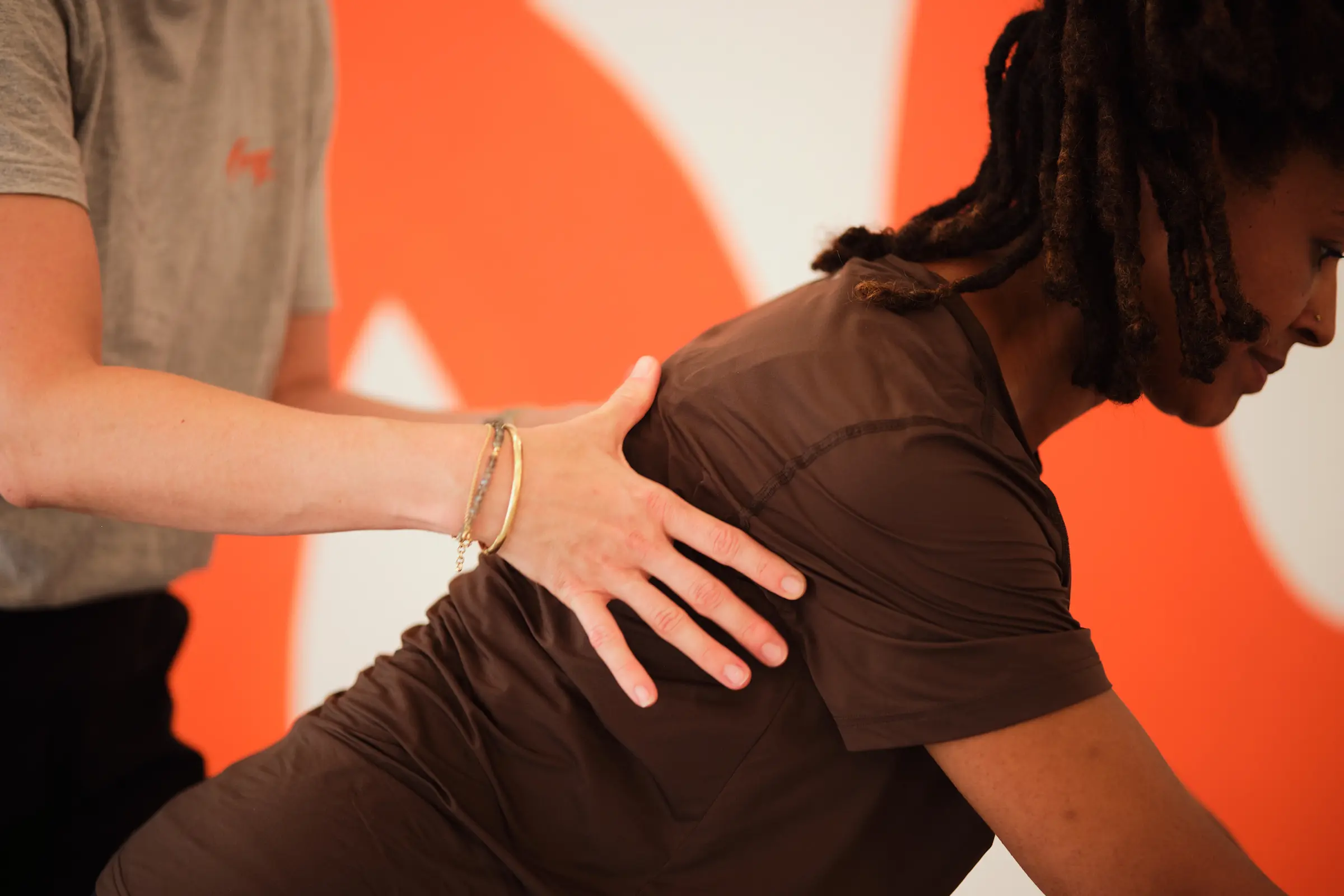
The classical method asks you to be present. It asks for concentration and precision. But it also teaches you to listen. To notice how you stand. How you breathe. Where you hold unnecessary tension. Where you need more support. It invites the body into the movement instead of forcing it through it.
Maybe that’s why so many people are surprised by how much classical Pilates affects them — not just physically, but mentally.
So many of us are used to ignoring the body’s signals. We keep going even when we’re exhausted. We tense up without noticing. We think that more pressure automatically creates better results.
But the body rarely works that way in the long run.
Something I see again and again with clients is how the nervous system starts to settle when movement is no longer about punishment or performance. When there is room for breathing, control, and support instead of pure survival.
Suddenly, people start standing a little taller. They have less tension in the jaw and shoulders. They sleep better. They start feeling their bodies more clearly again. Not necessarily because they’re training harder — but because they begin working with the body instead of against it.
That doesn’t mean training at Frog can’t be challenging. Classical Pilates can be extremely demanding work. But the difference lies in the intention behind it.
We don’t train to make the body “less wrong.” We train to support it better.
And maybe that’s exactly what the Frog philosophy is about.
Movement without punishment.
Movement without shame. Without constant self-criticism. Without the idea that the body is only valuable once it looks different.
Just intelligent, consistent, and caring movement.
I don’t believe people build a strong relationship with their body through fear or control. I believe it happens through trust. Through repetition. Through the feeling of being safe enough to actually notice yourself.
And honestly — in a world where so much is about constantly optimizing yourself, I think sometimes the most radical thing is simply learning to meet your body with a little more kindness.